
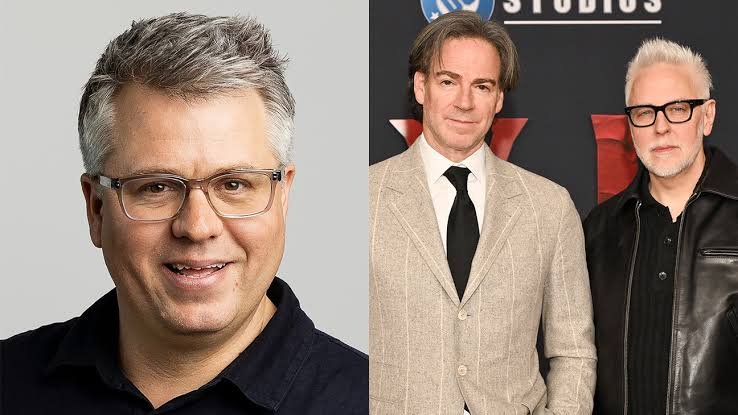

Why James Gunn and Peter Safran Short-Lived DC Era Was Less Than Super
James Gunn and Peter Safran’s leadership at DC Studios has become a major talking point among superhero fans. The duo took charge of the studio in 2022 with an ambitious plan to rebuild the DC Universe and create a connected franchise featuring movies, television shows and animated projects.
Their vision was to give DC a fresh identity and compete with Marvel’s successful superhero universe. However, their leadership period faced several challenges, including mixed audience reactions, box-office disappointments and questions about the direction of the franchise.
James Gunn and Peter Safran DC Leadership
James Gunn and Peter Safran were appointed co-chairmen and CEOs of DC Studios in 2022. Their responsibility was to rebuild the DC franchise after several years of inconsistent releases and creative changes.
They introduced a long-term plan called the DC Universe, beginning with a chapter titled Gods and Monsters.
The strategy aimed to connect films, television shows and animated projects while allowing individual stories to maintain their own identities.
However, their leadership journey reportedly came to an end following major corporate changes at Warner Bros. Discovery. Jeremy Latcham was announced as the new president and chief creative officer of DC Studios, with the transition scheduled for December 1, 2026.
Superman Was Their Biggest Box-Office Success
One of the biggest achievements of Gunn and Safran’s leadership was the release of Superman, directed by James Gunn and starring David Corenswet.
The film introduced a new version of the iconic superhero and established the foundation for the new DC Universe.
It earned approximately $618.7 million worldwide against a reported production budget of $225 million.
The performance was considered an encouraging beginning for the new DC franchise. However, the film’s success did not automatically translate into consistent momentum for the studio’s subsequent releases.
The bigger question was whether DC could turn one successful superhero movie into a long-lasting cinematic universe.
Supergirl Became a Major Setback
Another major project under their leadership was Supergirl, starring Milly Alcock.
The movie was expected to expand the new DC Universe and introduce audiences to another important superhero.
However, its box-office performance reportedly disappointed industry expectations. The film faced questions about its commercial performance and the studio’s strategy of introducing lesser-known characters before establishing a stronger audience connection with its biggest superheroes.
This became another challenge for Gunn and Safran during their leadership.
Clayface Delivered a Different Kind of DC Story
Another important project was Clayface, a superhero horror movie based on Batman’s famous villain.
Unlike traditional superhero films, the project focused on body horror and psychological elements.
The film represented DC’s attempt to explore different genres rather than relying entirely on conventional superhero action.
Its development also demonstrated Gunn and Safran’s intention to make the DC Universe more diverse in terms of storytelling.
Why James Gunn’s Creative Vision Faced Criticism
One of the biggest criticisms of Gunn’s leadership was the overall direction of the new DC Universe.
His approach included comedy, unusual characters, emotional storytelling and connections between different superhero projects.
While some viewers appreciated this creative style, others wanted a more serious and traditional superhero approach.
Another concern was the decision to develop multiple Batman-related projects simultaneously.
Matt Reeves’ The Batman universe was continuing separately, while Gunn and Safran planned another Batman for the main DC Universe.
This created questions about how many different versions of the same character audiences could follow at once.
Critics also questioned whether the studio was developing too many projects without establishing a clear identity for the franchise.
The Penguin Remained a Major Success
Not every DC project from this period struggled.
The Penguin, starring Colin Farrell, received considerable attention and became one of DC’s strongest television projects.
The series attracted praise for its performances, dark atmosphere and crime-focused storytelling.
However, the series had been developed before Gunn and Safran took control of DC Studios.
Other projects, including Peacemaker and Lanterns, generated different levels of audience interest.
The overall television strategy therefore produced mixed results rather than consistent success across every release.
Jeremy Latcham Takes Over DC Studios
Following the reported leadership change, Jeremy Latcham is expected to take charge of DC Studios as president and chief creative officer.
Latcham previously worked at Marvel Studios and was involved in major productions, including Iron Man, The Avengers and Spider-Man: Homecoming.
His appointment could bring a different management approach to DC’s upcoming movies and television projects.
The company will now have to decide which parts of Gunn and Safran’s original creative strategy should continue and which projects may require changes.
What Happens to Upcoming DC Movies?
The leadership change does not necessarily mean that every project developed under Gunn and Safran will disappear.
Several projects are already moving forward.
Upcoming DC projects include:
-
Man of Tomorrow: James Gunn’s next Superman film, scheduled for July 9, 2027.
-
The Batman Part II: Robert Pattinson’s next Batman adventure, currently scheduled for 2028.
-
The People v. Gorilla Grodd: An upcoming DC television project.
-
Creature Commandos: An animated series in the DC Universe.
James Gunn and Peter Safran are also expected to remain involved in selected creative projects, although their future roles may differ from their previous leadership positions.
Final Thoughts
James Gunn and Peter Safran entered DC Studios with an ambitious vision to rebuild one of Hollywood’s biggest superhero franchises.
Their leadership delivered a successful Superman movie, introduced new characters and explored different genres through projects such as Clayface.
However, inconsistent commercial results, questions about the franchise’s direction and the difficulty of building a connected cinematic universe created significant challenges.
Their departure marks another important turning point for DC Studios. With new leadership expected to take over, fans will be watching closely to see how the next chapter of DC superhero movies develops.

